Preparation for the six-day race
Sleepless in Paris
After Walter Rutt signed the contract for the 1906 New York six-day race, he began preparing his body for the expected strain. The approach he took seems bizarre today and contradicts all modern training theory.
For a month, he deliberately subjected himself to extreme sleep deprivation and divided the little time he spent in bed into irregular intervals. During his waking hours, he completed short, high-intensity strength training sessions during the day.
On his bike, he practiced fast starts and sprints for up to a quarter of an hour at top speed. In this way, he simulated the chases that would make up the toughest part of the race.
Every night, he set off from his home in the Paris suburb of Courbevoie for three laps of the neighboring districts, deliberately choosing cobbled sections. This procedure was intended to mold the leather saddle to the exact shape of his buttocks and thus prevent subsequent seating discomfort.
He also changed his diet and forced himself to eat small meals frequently and at unusual times so that his stomach would get used to it.
During the six-day boat trip to the USA, he kept in shape by training on rollers and jumping rope.
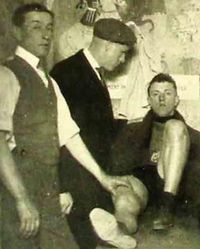
Walter Rutt during the massage
Everything clean?
When asked whether he had always been “clean,” Walter Rutt once gave a very vague answer: “I never took any direct doping substances, but I can't swear that my manager didn't put something in my food to make me more resilient.”
“The six-day races
were always a huge strain for me.”
Walter Rutt 1957
The nutrition of a champion
"During the six-day race, I eat my meals at the usual times, but I feed my body easily digestible foods between meals. Moderation is key. An overloaded stomach would react badly during exertion, whereas light foods are easily digested while riding.
Six-day riders can refresh their spirits with good food and drink, but on a long ride they encounter other adversities that they must overcome. Their wrists and arms suffer from leaning on the handlebars, their back muscles begin to ache, and their necks start to stiffen. This is where the masseur must intervene."
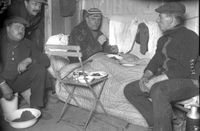
"I have never been a vegetarian. During the six-day race, I ate meat in every form and did not deny myself a glass of beer. Chicken, chicken broth, and American beef tea are preferred by many six day racers, as are fruits and vegetables.
Champagne, enjoyed in small quantities, does no harm, but coffee or tea are preferable as beverages. A glass of porter refreshes and speeds up digestion, which is something six-day riders need to pay particular attention to."
In the early years of the Berlin six-day race, each team had its own kitchen in the catacombs of the hall, where a professional chef cooked, fried, braised, and baked for his two riders and usually four assistants. Despite this provision, Walter Rutt lost an average of four kilograms of body weight during a six-day race.